Roof Repair Wake Forest, NC
- Home
- Roof Repair Wake Forest, NC

Wake Forest Grew in Rings. Its Roofs Did Too.
Drive north from Raleigh and Wake Forest reveals itself in rings. Near the old college campus and the historic downtown, the roofs are mid-century cottages and brick ranches with decades of weather in them. A few minutes out, the 1990s and 2000s subdivisions sit at the age where shingles start asking questions. At the outer edge, toward Youngsville and Rolesville, the subdivisions are so new the sod is still being laid. Raleigh Roof Pro runs Wake Forest as the last stop on its northern route, and we repair all three rings: careful work on the old core, wear-and-storm fixes in the middle, and storm-only calls on the new edge. The ring your house sits in decides what we look for first, and this page explains exactly that.
The College-Town Core: Older Homes Near the Historic Campus
The houses around Wait Avenue and the old campus went up when Wake Forest was a college town, and their roofs carry the history: plank decking, narrow shingle courses, flashing that has been adapted a few times. Repairs here want a light hand: brittle shingles pulled by hand, decking probed before anyone leans on it, and matching stock that respects the scale of the house. We keep older profiles and salvage on the truck for this ring, and we say so when a modern blend is the honest alternative.
The Middle Ring: 90s and 2000s Roofs Hitting Repair Age
The subdivisions built in the town’s first big growth wave are now twenty to thirty years old, which is exactly when the original shingles, pipe boots, and flashing hit their wear window. The calls from this ring follow a pattern: a boot that dried out, a valley that wore thin, a first storm section repair after years of quiet. These are good repairs, because the surrounding field usually still has life, and we price them as the targeted fixes they are, with a straight note on which parts of the roof will ask for attention next.
The Outer Edge: New Roofs and Storm-Only Repairs
Past the middle ring, the roofs are younger than the trees planted beside them, and the repairs are almost all weather: wind creases on open ridges, limb strikes from yards that fell sooner than expected, and the occasional installation defect that shows itself in the first hard season. We document storm damage the way carriers want to read it, and where a defect belongs to the builder, we photograph it against the manufacturer’s spec so the right conversation happens with the right party, with our storm damage file doing the talking.
The Northern Run: Scheduling at the End of the Route
Wake Forest is the farthest town we serve from our Raleigh yard, and we plan for that instead of pretending otherwise. Northern repairs get batched into dedicated runs so a small fix is not eating a whole day of driving, and active leaks jump the batch. What we will not do is quote you a same-day promise we cannot keep from twenty-five minutes south; what we will do is tell you the honest window when you call and hold it.
The Farthest Town Gets the Same Standard
Distance is where service quality usually thins, and we built the northern run so it does not. The truck that works Wake Forest carries the same matching stock, the same flashing metal, and the same photo discipline as the trucks inside the Beltline; the only difference is the mileage. Batching means your small repair shares the run with two neighbors’ jobs, which keeps the price honest and the crew busy, and the schedule we quote is the schedule we hold.
The ring knowledge matters as much as the logistics. A leak near the old campus gets a conservator’s patience; a creased ridge in a new subdivision gets carrier-ready documentation; a worn valley in the middle ring gets a targeted fix and a watch list. Raleigh Roof Pro has worked Wake Forest long enough to know which ring your house sits in before we pull into the driveway, and the repair plan starts there.
First Question: Which Ring Built Your Roof
We place your house in a ring before we price anything, because the ring sets the expectations: decking type, likely shingle line, the failures that era is known for, and the permit or HOA questions that come with it. Then we scope only what the ring suggests plus what the roof itself shows, and the estimate names the ring’s logic so you can see why each line exists. Approve it and the same crew returns on the next northern run, finishes, water-tests, and leaves the photo file with you.
- Ring-first scoping that sets decking, matching, and documentation expectations
- Older profiles and salvage stocked for the historic core, current lines for the rings
- Carrier-ready storm files on the new edge, watch lists in the middle ring
- Batched northern runs with honest windows quoted and held
Matching Shingles Across Three Building Booms
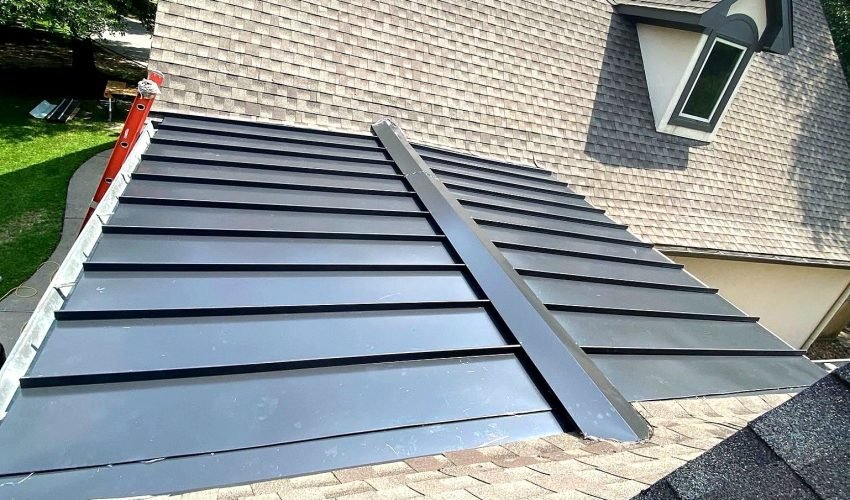
Each ring bought from a different catalog, so one truck cannot carry every answer. For the core we lean on salvage and older stock; for the middle ring we keep the lines those subdivisions were built with; for the new edge the current products are still in production and matches are simple. When a repair sits between rings, an addition on an old house or a re-roofed home in a newer street, we blend at the least visible seam and you approve it from the ground first. If the field itself is done, the honest next step is a roof replacement scoped as one project.
Wind on the Open North Side
The outer subdivisions sit in terrain that has not grown its trees yet, and wind arrives there with fewer brakes. We see creased tabs and lifted edges after gust fronts that barely touch the leafy core, while the core’s older streets take limb strikes instead. The report labels which damage came from moving air and which came from falling wood, because they claim differently and repair differently, and the National Weather Service event log backs the dates when you file.
What Roof Repair Costs in Wake Forest
The rings price differently: core repairs carry slower labor and salvage hunting, middle-ring fixes are the quickest and friendliest numbers on the page, and new-edge storm work is documentation-heavy with labor that is usually covered by a claim. The scoping visit that sorts them costs nothing, and the estimate tags each line to its ring with the product named, so you can see exactly which Wake Forest you are paying for. Trimming scope stays on the table; the roof tells us what can wait.
Asked at the End of the Northern Run: Wake Forest Questions
Wake Forest runs on our northern batch, so planned repairs land on the next scheduled run, usually within a few days, and active leaks jump the batch entirely. We quote the honest window when you call, including the drive reality of being our farthest town, and we hold it. If water is moving now, we tell you what to shift and catch inside until the crew arrives.
Minor repairs generally do not, while re-roofs and structural decking work usually do, and the Town of Wake Forest administers its own permits separate from Raleigh. Newer subdivisions sometimes add an HOA review step of their own. We confirm both for your address before scheduling, and any fee shows as its own line on the estimate.
That age is the classic fork. If the field still lies flat and the wear is at boots, flashing, and one valley, targeted repairs buy real years and we say so. If granule loss is general and edges are curling, the roof is entering its last chapter, and we show you the repair number and the replacement number side by side so you can plan instead of guess.
Usually closely enough to disappear at street distance. We stock the lines those subdivisions were built with, pull salvage when the exact shade matters, and blend at the least visible slope when neither exists. You approve the match from the ground before we cut, and if the field is too far gone to blend, we tell you instead of patching a dying roof.
Yes, with the patience that ring deserves. Cottages and ranches near the old campus get hand-pulled brittle shingles, careful decking probes, and matching stock that respects the house's scale. Where a home sits inside historic guidelines, we keep visible work respectful and confirm any review step before we schedule. Old roofs get repaired, not remodeled.
From the ground, look for creased or lifted shingles on the ridges and rakes, shingle pieces in the yard, and any flashing that reads crooked. Then let us climb. Wind damage on new shingles is often claimable, and it documents best when it is fresh, so a post-storm visit within a week or two gives your claim its cleanest file. The visit costs nothing and leaves you a photo record either way.
About Us
Raleigh Roof Pro
Raleigh-based roofing contractor handling repairs, replacements, and storm damage across Wake County, from a single pipe boot to a full tear-off.
this is iframe for city map location